

Anti-PU-Leakage Mid Insole
Insole for athletic, sport and safety shoes in PVC / PU injected construction. PNO Insole is one of the main products of QUANZHOU MAXIN NONWOVENS TECHNOLOGY CO.,LTD. with good price andquality,Factory wholesale with discounts.Our factory is a professional suppliers china and Manufacturers china.
Category:
Other Shoe Components
Get Quote
Product description
PNO Insole for PU injection shoe
PU stroble insole for PU injection
Anti-PU-Leakage Mid Insole
Anti-PU-Leakage Mid Insole
For PU Direct-Injection Footwear — Technical Product Introduction
The anti-PU-leakage midsole fabric (also referred to as a midsole board fabric, bottom-closing fabric, or strobel/bottom lining) is a specially engineered composite material developed for footwear manufactured by the polyurethane (PU) direct-injection moulding process.
Its primary function is to form a liquid-tight barrier at the bottom of the lasted upper, preventing the low-viscosity PU reaction mixture from penetrating or leaking through the upper during injection, foaming, and curing.
In PU direct injection, the liquid polyol/isocyanate mixture is injected under high pressure (typically 120–200 bar) directly into a mould enclosing the lasted upper. Because the mixture remains highly fluid before gelling, it readily wicks into porous substrates.
When the bottom of the upper is closed with an ordinary woven or non-woven midsole fabric, the liquid PU migrates through the fabric and through stitching holes and emerges on the upper surface or footbed — a defect commonly termed “PU leakage” / “bleeding”. This causes cosmetic flaws, irritates the wearer’s foot, and compromises the uniformity and strength of the sole-to-upper bond.
The anti-leakage midsole fabric is therefore engineered as a multi-layer barrier laminate that is impermeable to liquid PU, yet remains soft, flexible, and fully bondable to both the upper and the cured PU — preserving the comfort, aesthetics, and manufacturing efficiency of the finished shoe.
2. Background — The Mechanism of PU Leakage
During direct injection, the liquid PU system exhibits the following characteristics that drive leakage:
|
Factor |
Typical Value / Behaviour |
Consequence |
|
Viscosity |
Low before gelation |
Easy penetration into fabric and seams |
|
Injection pressure |
120–200 bar |
Forces liquid into every void |
|
Foaming pressure |
5–10 bar during expansion |
Pushes PU through the substrate |
|
Reaction temperature |
40–55 °C (material) |
Reduces viscosity further |
Ordinary midsole fabrics — typically plain non-wovens or woven textiles with open pore structure and unsealed stitch lines — offer little resistance. Liquid PU follows the path of least resistance through pores, needle holes, and seam gaps, resulting in leakage and flash formation. The anti-leakage fabric is designed specifically to interrupt these flow paths.
3. Structure and Composition
The product is a laminated composite, typically composed of three functional layers:
- Base / reinforcement layer — a needle-punched non-woven fabric (polyester or polyamide), providing tensile strength, dimensional stability, and anchorage for the adhesive and the injected PU.
- Barrier / film layer — a continuous TPU film or PU film that acts as the primary liquid barrier, impermeable to the PU mixture under process pressure and temperature.
- Bonding layer — a hot-melt adhesive film (EVA, TPU, or reactive PU hot-melt) that bonds the composite to the upper during lasting, and provides a compatible surface for chemical bonding with the injected PU.
Optional configurations include an additional mesh or woven scrim for higher tear resistance, or a double-film construction for demanding multi-density (PU/PU, PU/TPU) applications.
4. Working Principle
- Sealing — the continuous film layer blocks bulk liquid flow, eliminating the open pores that allow PU to wick through.
- Stitch-line coverage — the laminate spans the full bottom surface, covering stitching holes and seam gaps where leakage typically initiates.
- Adhesive anchoring — the hot-melt layer bonds the barrier to the upper, ensuring there is no interfacial gap through which PU can travel.
- Bond compatibility — the film surface is formulated to chemically and mechanically fuse with the injected PU during curing, so the barrier does not reduce sole adhesion but rather forms part of a permanent bond.
5. Key Technical Specifications
The table below lists typical values; actual figures can be customised per application:
|
Property |
Typical Range |
|
Basis weight |
200–500 g/m² |
|
Thickness |
0.8–2.5 mm |
|
Film layer thickness |
0.02–0.08 mm |
|
Tensile strength |
≥ 40 N/50 mm (depending on grade) |
|
Elongation at break |
20–80 % |
|
Peel strength (to upper) |
≥ 2.5 N/mm |
|
Heat resistance (short-term) |
Up to 100–120 °C |
|
PU penetration resistance |
No leakage at 120–200 bar injection pressure |
|
Colour |
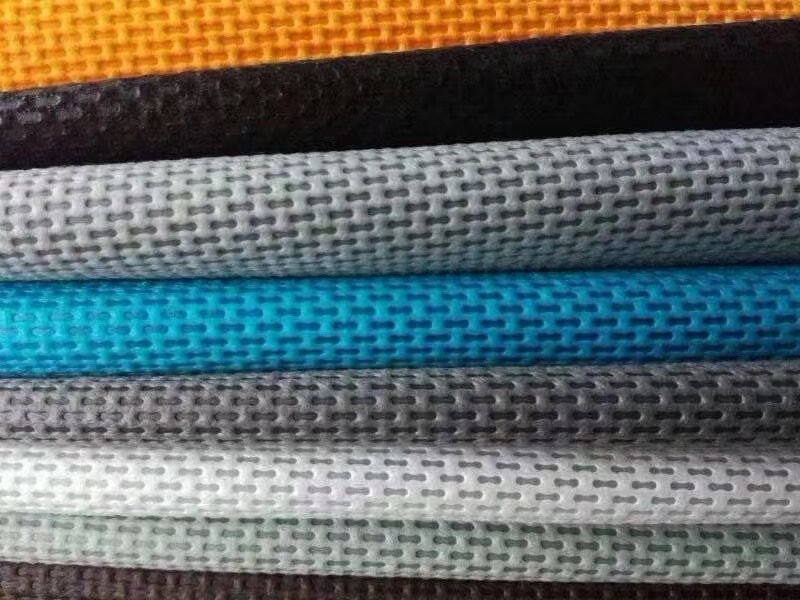
White / black / grey / custom |
|
Roll width |
1.0 m / 1.4 m / 1.5 m / custom |
6. Advantages and Benefits
- Eliminates PU leakage defects — reduces visible bleeding, flash, and surface contamination.
- Higher yield and lower rework — fewer rejected pairs and less manual cleaning/trimming.
- Consistent sole-to-upper bonding — the barrier is bond-compatible, so adhesion is not sacrificed.
- Comfort preserved — engineered to remain soft and flexible, without stiffening the shoe.
- Lightweight — adds minimal weight to the shoe.
- Process compatibility — withstands lasting, pre-heating (95–105 °C), mould temperature (40–60 °C), and curing conditions.
- Customisable — basis weight, thickness, film type, and colour can be tailored to specific mould and upper designs.
7. Applications
- PU direct-injection safety shoes and industrial footwear
- Casual and comfort shoes produced by direct soling
- Dual-density PU/PU and PU/TPU injection constructions
- Any footwear process where the sole is formed directly onto the lasted upper and a bottom-closing fabric is required
8. Quality Control and Testing
|
Test Item |
Method / Criterion |
|
PU penetration test |
Simulated injection at production pressure; no leakage through the fabric |
|
Peel / bond strength |
Tensile peel test on upper-fabric and fabric-PU bonds |
|
Heat resistance |
No delamination or deformation after exposure to mould/pre-heat temperature |
|
Tensile & tear strength |
Per relevant textile test standards |
|
Dimensional stability |
Shrinkage after thermal exposure |
|
Ageing resistance |
Accelerated ageing test for hydrolysis/UV stability |
9. Storage and Handling
- Store in a cool, dry, ventilated area, away from direct sunlight, moisture, and heat sources.
- Keep the hot-melt surface clean and free from dust, oil, and release agents to maintain bonding performance.
- Use within the recommended shelf life (typically 6–12 months for hot-melt grades).
- Avoid excessive folding or compression of rolls to prevent film creasing or delamination.
Experience the difference with PNO insole - the perfect blend of customized comfort, quality materials, and cost-effective solutions for all your footwear needs. Contact us today to discover the ultimate insole experience for your feet!
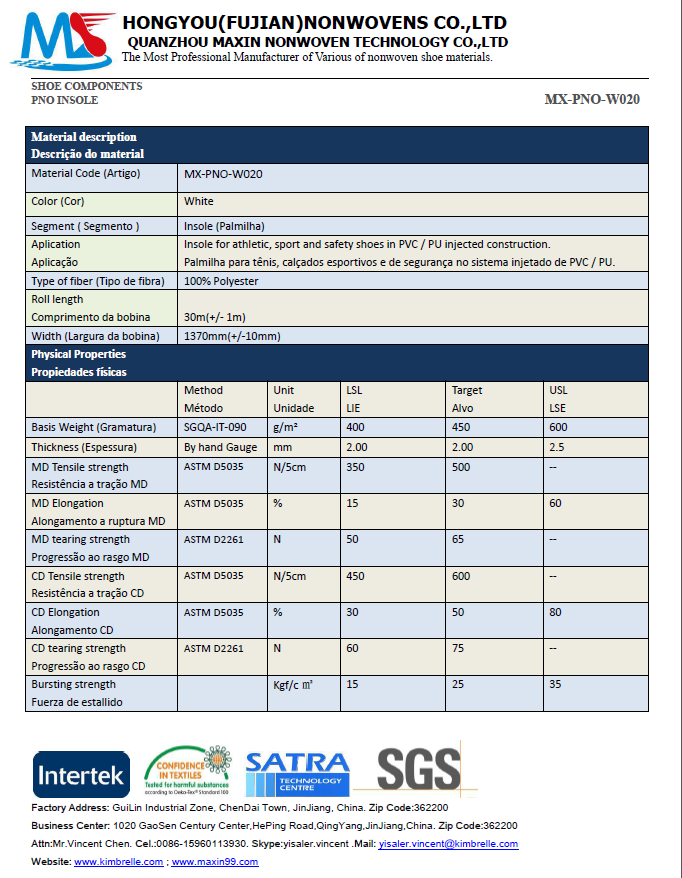
Main Thickness : 1.5mm , 2.0mm, 2.25mm , 2.5mm
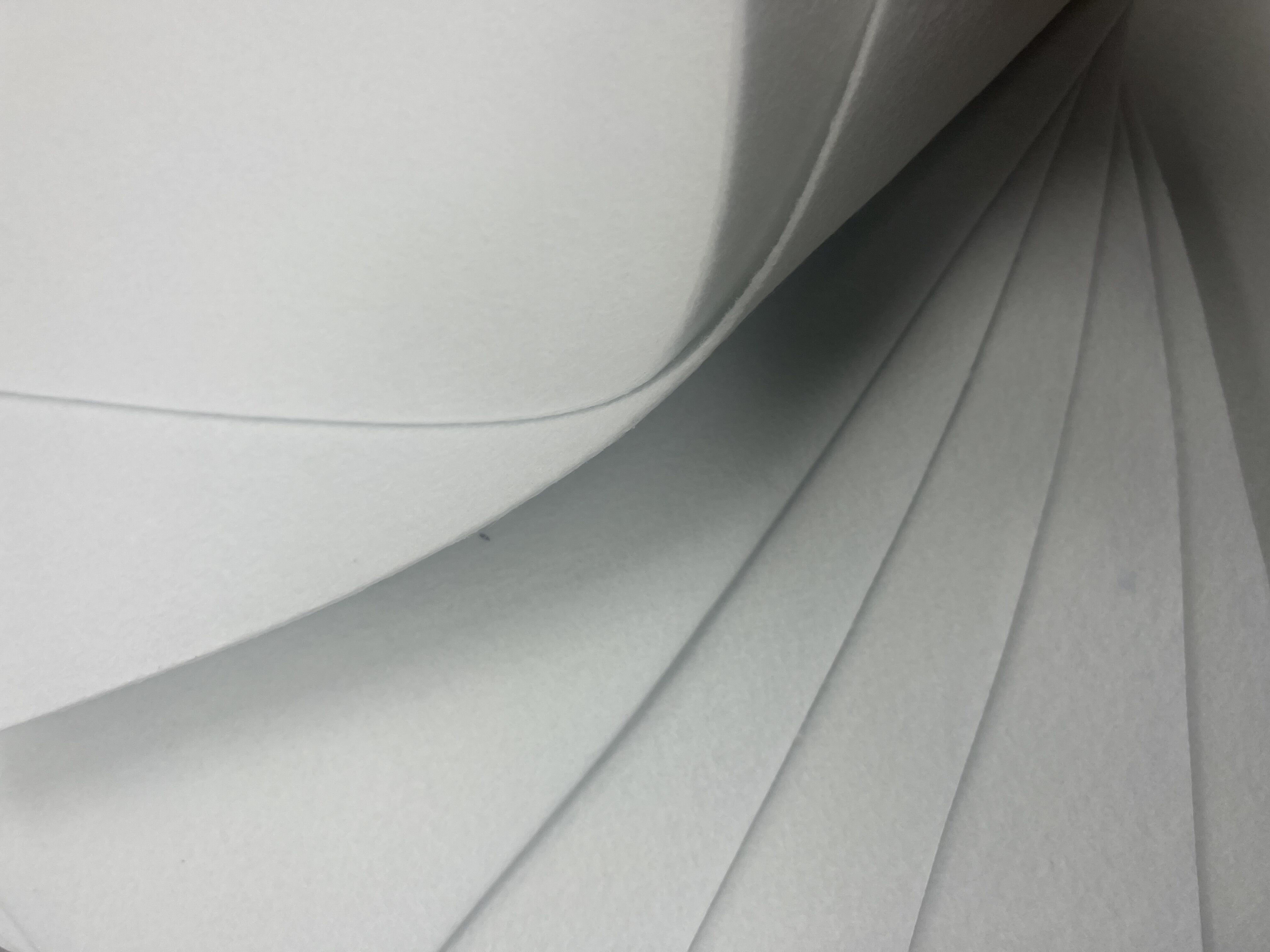
Its not by sheets , but rolls
Width at 54”,60” normally .
Packing in 30meters length and 50 meters length .
Main Specification as below :
Prev
Next



Get product quotes for free

Copyright © 2023 QUANZHOU MAXIN NONWOVENS TECHNOLOGY CO.,LTD.